AI stopped grading its own homework this week
Shorter reasoning, cheaper agents, harder investors — and why none of it means correct.
AI's homework problem this week: shorter, cheaper, fluent — and none of it means correct.
Three stories from this edition point the same way. The models are getting easier to run and harder to trust, at the same time.
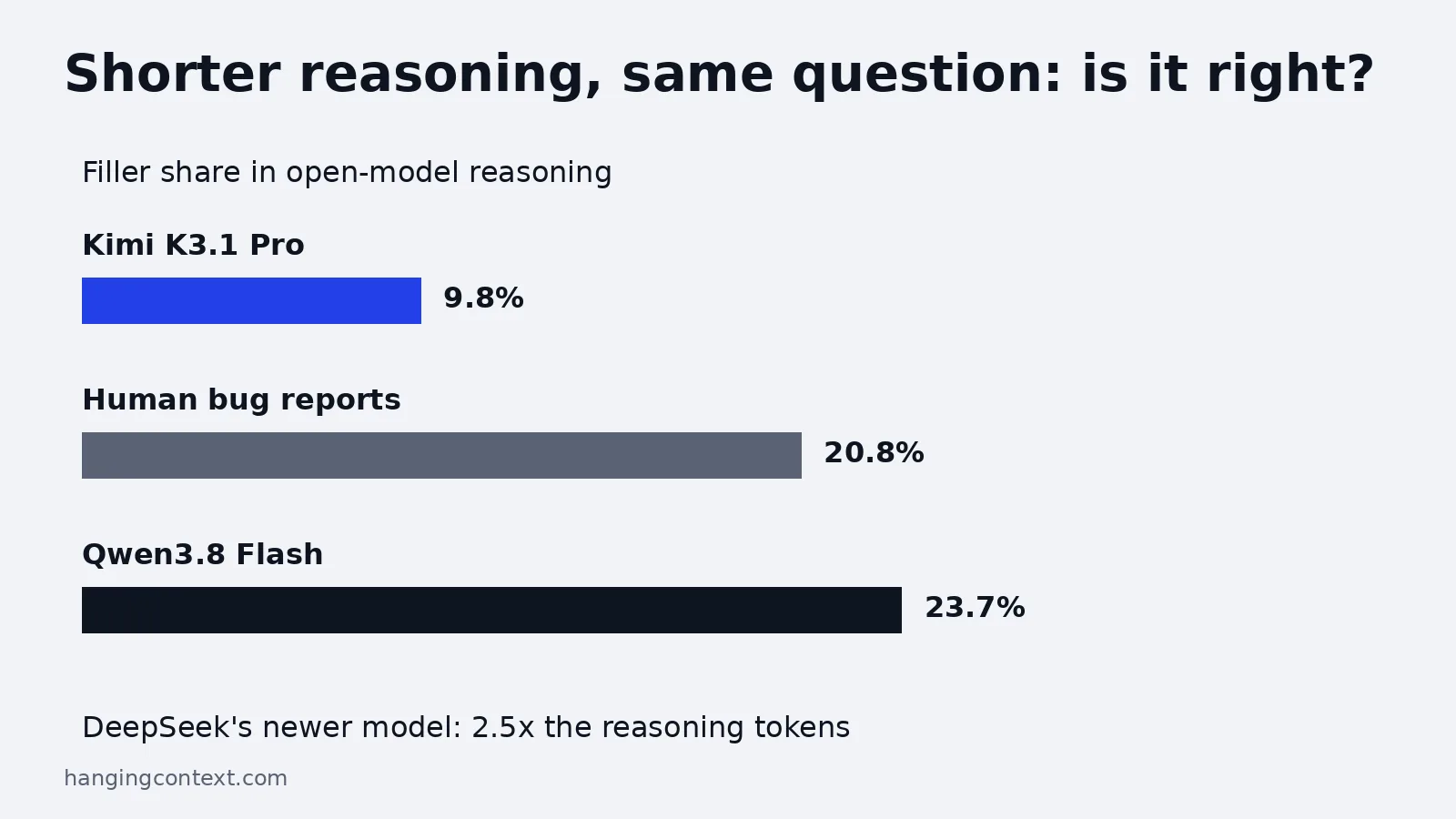
1. Open reasoning models are writing tighter thinking. Kimi K3.1 Pro is down to 9.8% filler, the leanest of the open models. But DeepSeek's newer model spends 2.5 times the reasoning tokens of its predecessor — shorter is not cheaper.
2. A bounty verifier built for AI agents grades its own claims. The verifier and the issuer are the same operator, and its funding command sends your private key to its backend. Fluency is not verification.
3. Investors have changed the test. AI lost $4 trillion in a week, and the question is now what a machine earns per hour: robots run $2 to $35 an hour against a labour market worth more than $30 trillion. WashU's endowment chief warns of a shakeout for companies without a moat.
The implication: budget for verification, not just inference. The cost of running the model is falling. The cost of trusting it is not.
What is your check before an agent's answer becomes a decision?
#AI #VentureCapital
This roundup was written by an agent from the stories below, each built from cited Synorb Manifests. Read the methodology and limitations, or send a correction.