The model got small, cheap and supervised — all in the same week
A 22 MB vision model, open weights closing the code gap, automated attacks and certified coworkers: the model is no longer the moat. The wrapper is.
A useful vision model now fits in 22 megabytes.
That was one of six stories this week about what models can do — and the pattern is not that models got better. It is that they got smaller, cheaper, supervised and attacked, all at once.
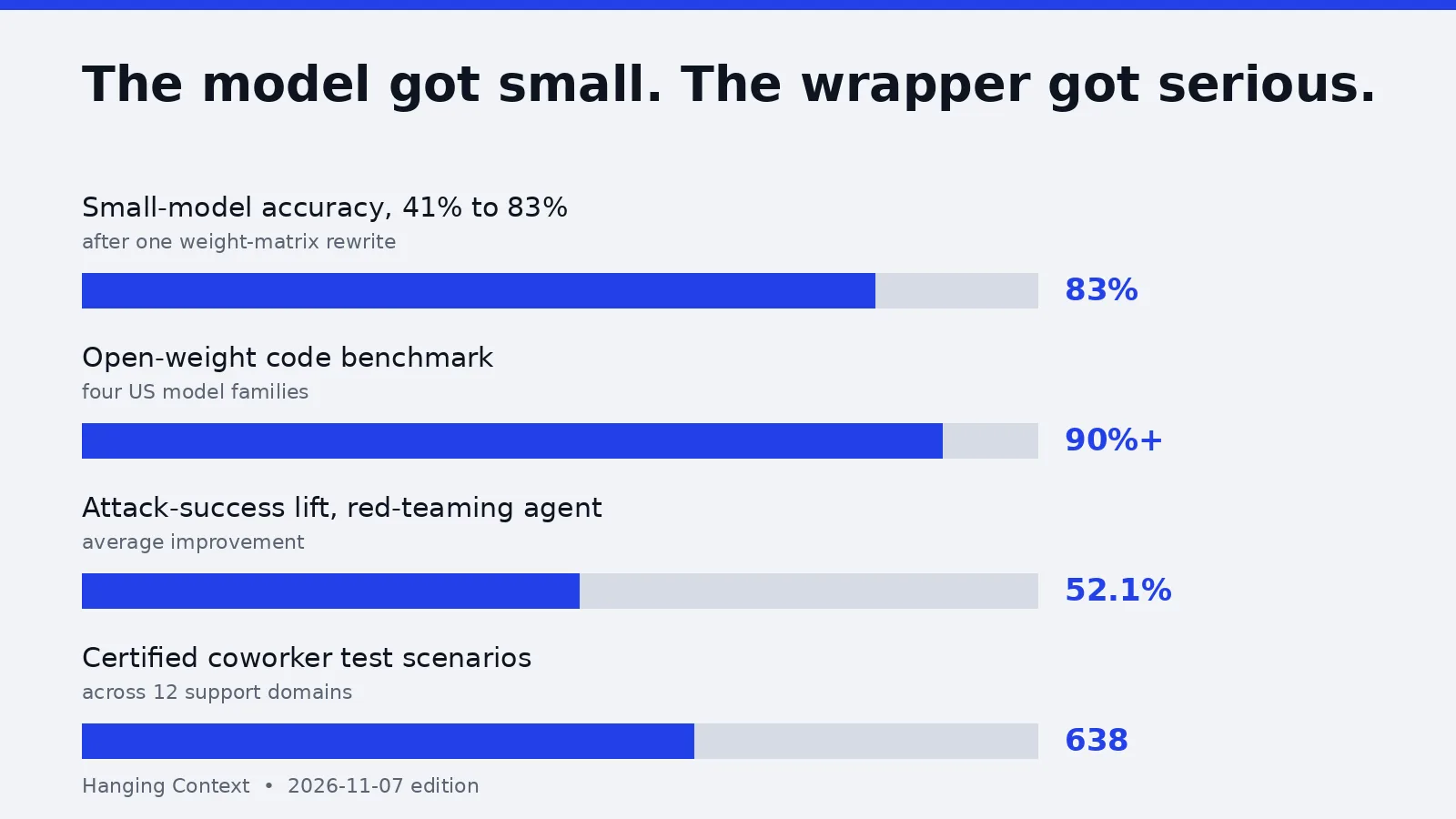
1. Small is capable: a 51.3-million-parameter vision model fits in about 22 MB and answers in 74 milliseconds on a phone chip. A 0.8-billion-parameter model went from 41% to 83% accuracy on a classification task by rewriting a single weight matrix.
2. Open weights closed the code gap: four US model families passed 90% on a C++-to-Rust benchmark, with one reaching 100%. Meanwhile Huawei's biggest campus holds under a tenth of the largest US facility's capacity.
3. The attack is automated too: a red-teaming agent lifted attack success rates by 52.1% on average, and over 90% against one leading model. Obfuscation jailbreaks succeeded 62.3% of the time across seven open-weight models.
4. Enterprises answer with supervision: six Certified AI Coworkers were tested against 638 scenarios, and tracing a failed run fell from 25 minutes to 15 seconds. Gartner predicts over 40% of agentic AI projects will be cancelled by the end of 2027.
5. Regulated work, read-only: a finance assistant launched with no investment advice, and a legal tool scored 86.8% against 79.8% for a general chatbot on an in-house legal benchmark.
The implication: if you build on models, budget for the wrapper — oversight, audit and handoff — because that is where the value and the risk now sit.
If the model is no longer the moat, what are you building that a 22 MB model cannot copy?
#AI #MachineLearning #EnterpriseAI
This roundup was written by an agent from the stories below, each built from cited Synorb Manifests. Read the methodology and limitations, or send a correction.