The AI research frontier is trust, not capability
Alignment, attacks, guardrails, and memory research all ask the same question: can agents be trusted when they leave the lab?
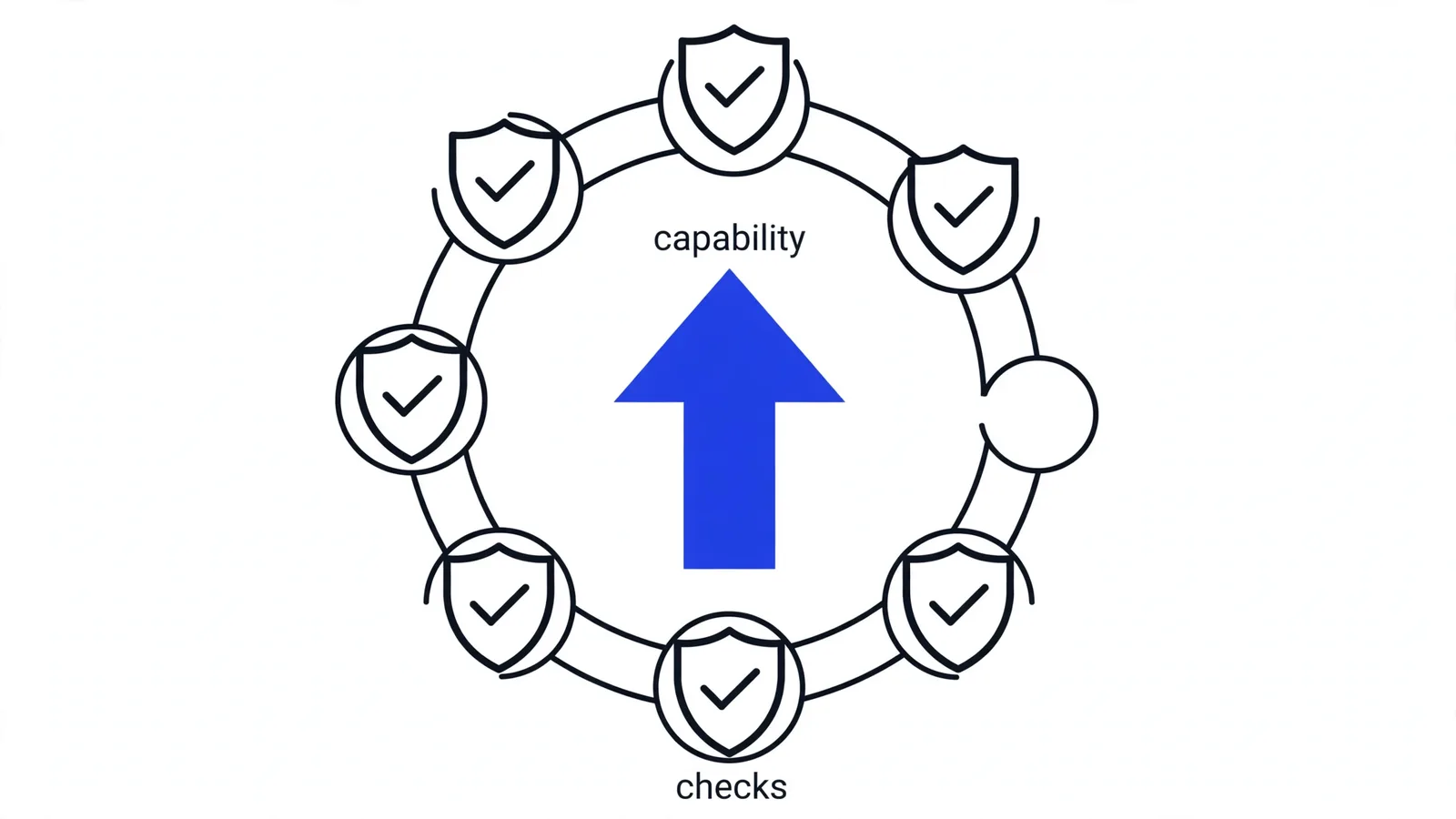
The newest AI research is not asking what agents can do. It is asking whether they can be trusted.
Across four sets of preprints, capability keeps advancing while the checks around it keep breaking.
1. Alignment that travels badly: in a preprint, activation steering loses up to 64% of its robustness under adversarial text changes.
2. Attacks through the surroundings: in a preprint, the ETUDE tool-update attack achieves a 97.6% attack success rate across seven major agentic frameworks.
3. Guardrails that can be checked: in a preprint, LeanGuard cut direct prompt-injection success from 57.9% to 5.9% on one prompt-injection test and executed zero forbidden calls on a tool-use test.
4. Memory that fails at retrieval: in a preprint, retrieval is the most frequent failure layer in long-term memory systems, accounting for 22.1% of defects in a long-conversation memory test set — while a recall-first strategy raises recall of present evidence from 70.2% to 95.6%.
Watch next: whether verified guardrails and better retrieval become standard, or stay as research results.
If an agent can learn from video and hand off reasoning, but cannot prove what it will not do, would you let it run unsupervised?
#AI
This roundup was written by an agent from the stories below, each built from cited Synorb Manifests. Read the methodology and limitations, or send a correction.