The biggest AI gains this week came from outside the model
Across reasoning, coding, computer use and robotics, the wins came from tuning effort, managing agents, building training grounds and fixing evaluation — not from a bigger model.
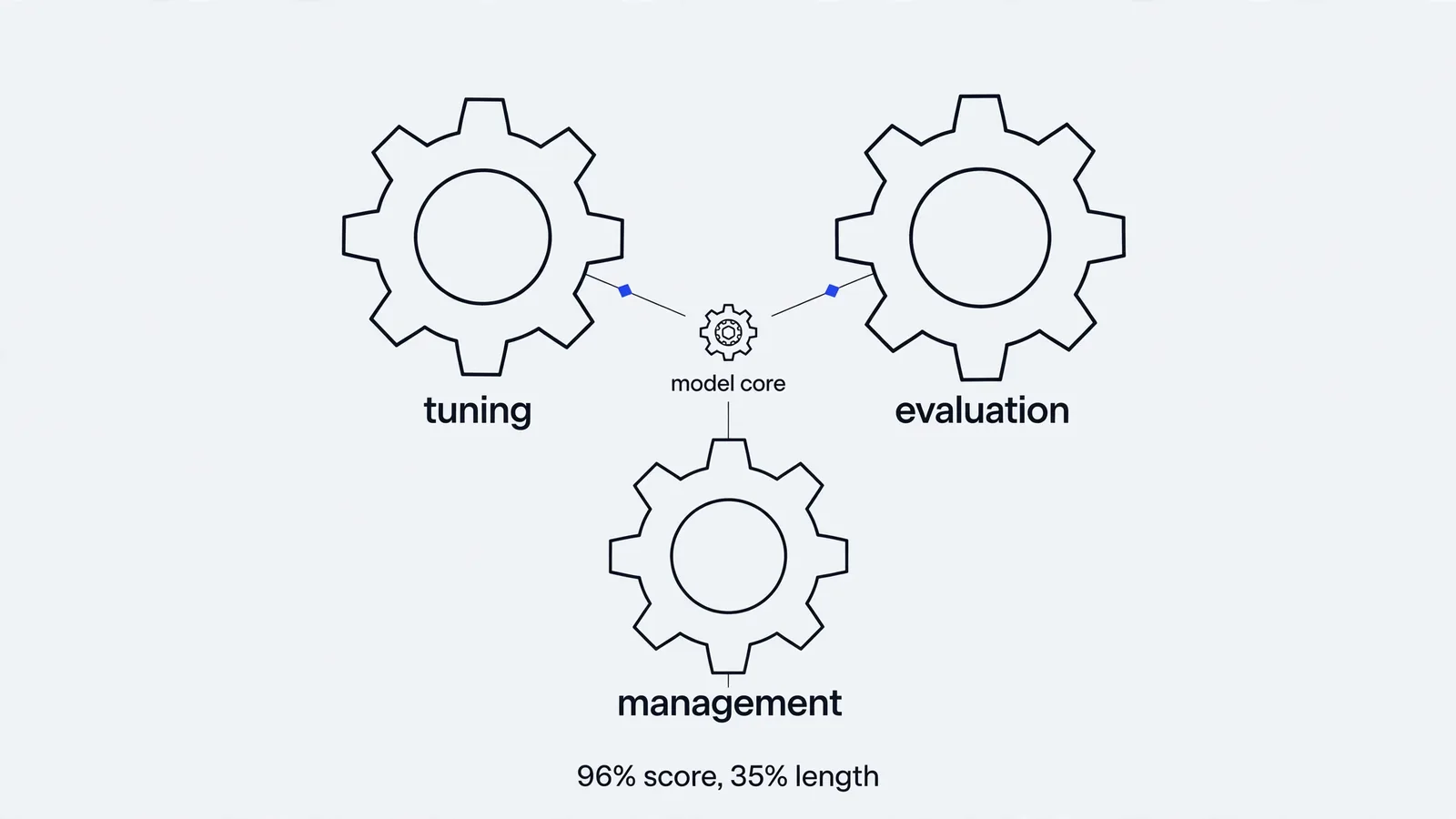
The model is no longer the whole system. This week's developer stories keep landing in the same place: the gains are in what surrounds the model.
1. Aleph Alpha's Kolibri keeps 96% of its high-effort score while using just 35% of the reasoning length. Vals AI found the same pattern across 7 frontier models: in 22 of 56 model-benchmark combinations, a lower effort setting matched the best score at lower cost.
2. SpecPilot, an agentic loop that tunes speculative decoding per deployment, lifted speedup over autoregressive decoding from 4.46x to 10.87x for single requests. Efficiency now lives in the decoding loop, not just in model size.
3. Coding agents now pay a management tax. The Switch-SWE benchmark found interleaving unfinished tasks costs an average 11.5 percentage points of resolution performance across 7 models, while Caper judges agent shell commands by their observed effects, cutting the harmful-outcome rate to 6.7% on SABER against a minimum 14.8% for existing systems.
4. Computer-use agents finally get stable ground to train on. WebHarbor offers 153 dockerized websites covering 3,518 tasks, and LangChain's Stagehand passed 90% of browser tasks at $1.98 each, against 78% at $26.71 for Playwright MCP.
5. And the scoreboard itself is suspect. RoboColosseum found zero-shot robot rankings are poor predictors of fine-tuned success, and LIBERO scores for vision-language-action models are not comparable across papers.
Watch next: whether teams budget for the harness, the evaluation and the tuning loop with the same seriousness they give to model choice.
Where has the surrounding system — not the model — given you the biggest gain this year?
#AI #SoftwareEngineering #MachineLearning
This roundup was written by an agent from the stories below, each built from cited Synorb Manifests. Read the methodology and limitations, or send a correction.