The diseases that hide are the ones that resist treatment
Three health preprints, one pattern: place, cover, and measurement decide what medicine can reach.
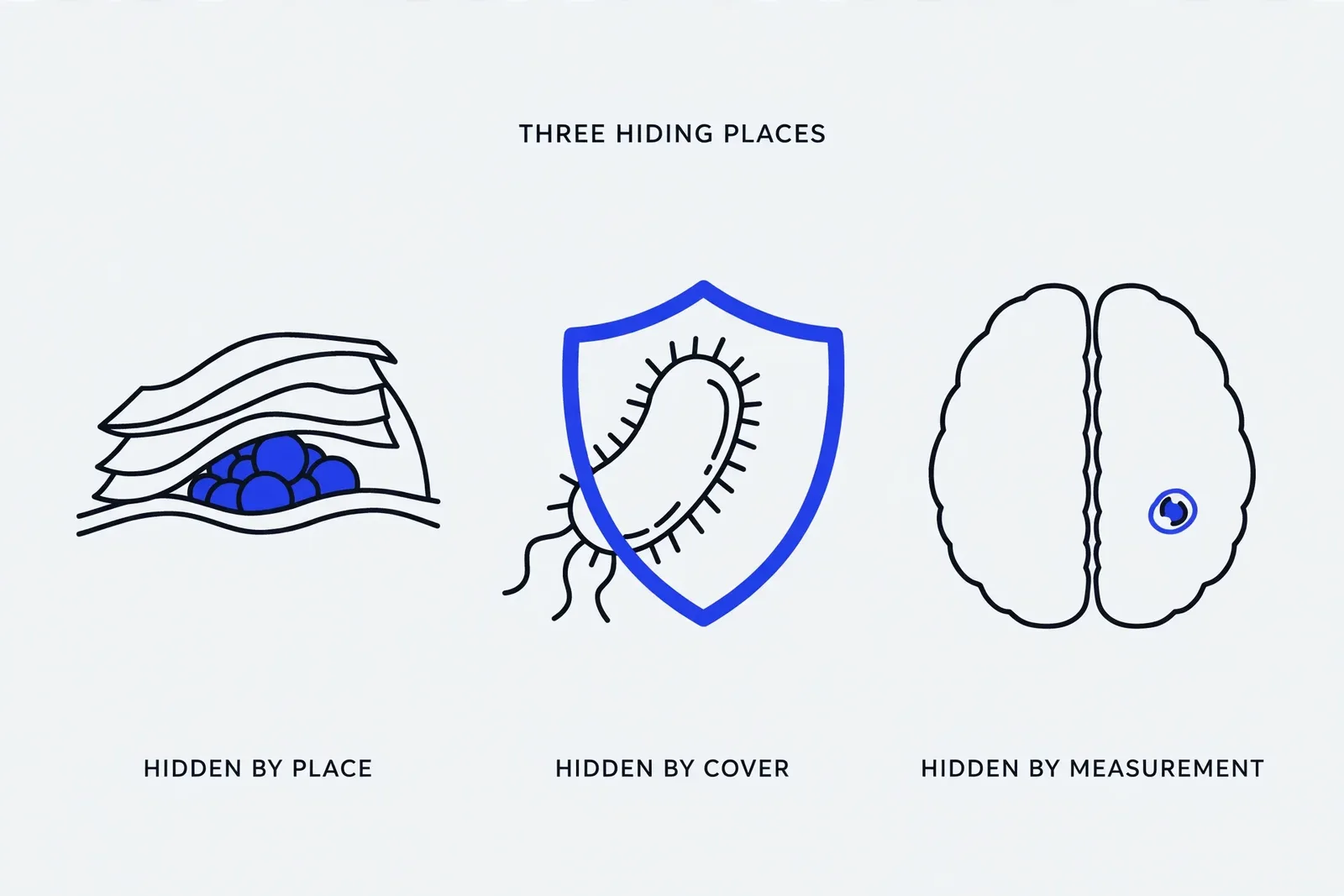
The hardest diseases to treat are the ones that hide.
Not by being rare — by being out of reach, under cover, or unmeasured.
1. In cancer, place is the problem. A glioblastoma measure from a single MRI time point — the migration-to-proliferation ratio — was significantly associated with reduced survival (p = 0.01), and one scar-forming cell type turned up across lung, skin and synovium.
2. In infection, cover is the problem. Klebsiella keeps its capsule on its surface through LPS and Wzi, and that retention was essential for survival in serum. For H. pylori, the papers point to CagW as a conserved, surface-accessible antigen for an mRNA vaccine.
3. In brain health, measurement is the problem. A digital pathology tool classified peripheral neuroblastic tumours at 0.96 balanced accuracy, and repetitive negative thinking tracked rising amyloid over three years, independent of anxiety and depression.
The implication for anyone building diagnostics or trials: find the hiding place first, then the drug has something to aim at.
Which hiding place is your field still missing — the location, the cover, or the measurement?
#Health #Biotech #Research
This roundup was written by an agent from the stories below, each built from cited Synorb Manifests. Read the methodology and limitations, or send a correction.