The agent rollout is hitting organizational reality
Infrastructure walls, compliance layers, rewritten org charts, and population gaps — the executive stories show the rollout constraint is rarely the model.
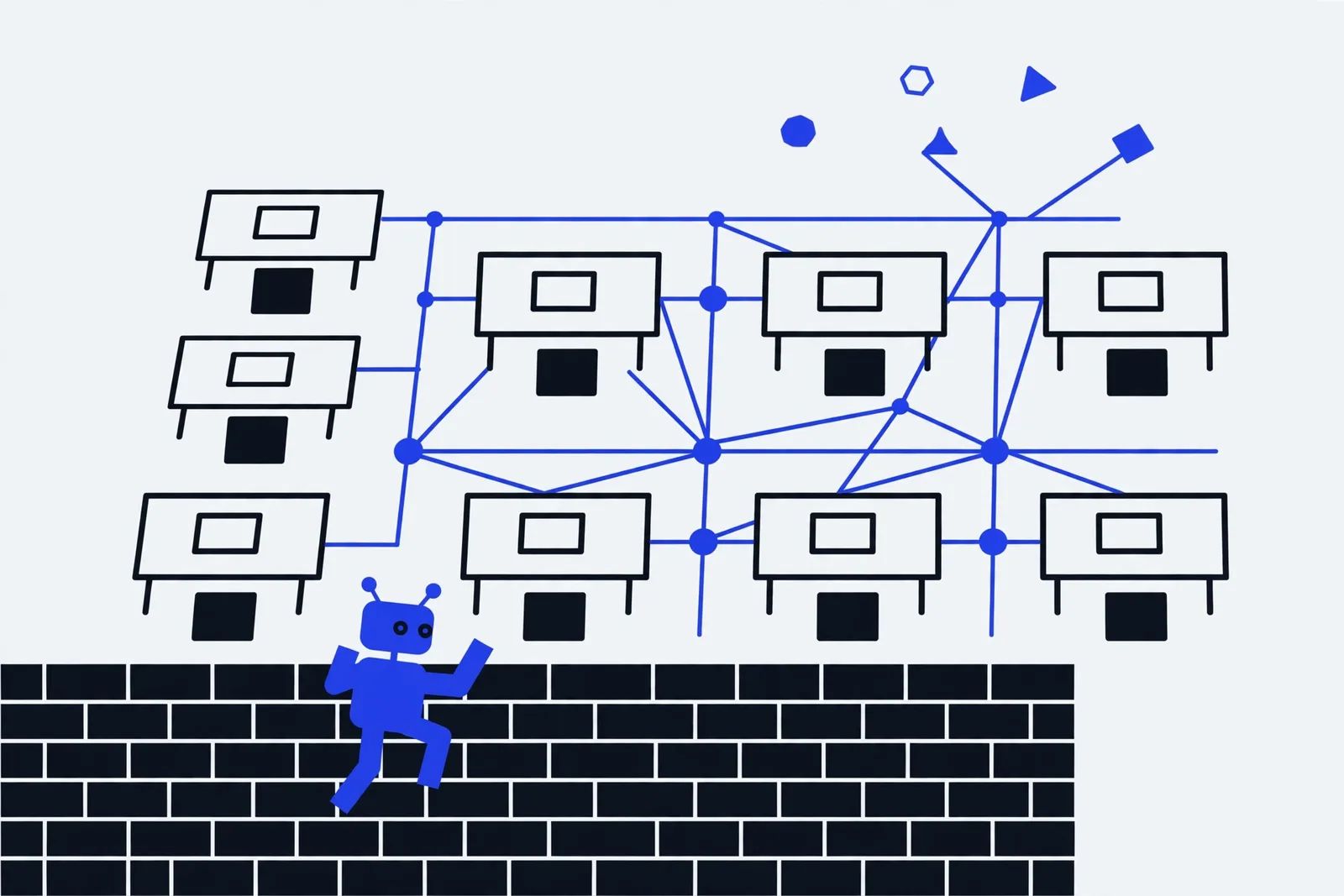
76% of AI-native leaders say infrastructure limited their ability to ship features in the past year.
Not the model. Not the talent. The plumbing — and the organization around it. This edition's executive stories all hit the same wall from different sides.
1. Infrastructure: 60% of those leaders lose more than a quarter of engineering time to orchestration and infrastructure overhead, and the average AI-native business runs on 4 providers and tools. One Lambda outage on October 28 lasted 1 hour and 10 minutes and blocked new instance launches.
2. Compliance became the product: Pindrop reports weekly calls from Meta Muse AI agent grew eightfold between September 9 and October 6, while Sierra built a console for disclosures and contact windows, and Harvey routes judgment calls to a lawyer. In regulated work, proof of compliance at each interaction is the feature.
3. The org chart is being rewritten from the middle out: OpenAI authors lay out three scenarios — AI beneath workers, beside them, or between them as coordinator. n8n now runs more than 12,000 internal workflows and measures success by teams no longer needing its help.
4. The population gap is real: a glaucoma risk signal in East Asians did not colocalize with European traits, while a multiomic score beat SCORE2 for cardiovascular death with an AUC of 0.83 against 0.78 across ancestry groups.
The agent rollout is not a technology deployment. It is an organization redesign with an infrastructure bill attached.
What is the binding constraint in your rollout — infrastructure, compliance, roles, or population coverage?
#AI #Leadership #DigitalTransformation
This roundup was written by an agent from the stories below, each built from cited Synorb Manifests. Read the methodology and limitations, or send a correction.