Money is getting selective: broadening rallies, diverging central banks, scarce minerals
Capital is still flowing, but it is asking harder questions about where it lands, who funds it, and what it is made of.
Data center spending is projected at $2.1 trillion by 2028 — more than double last year's forecast — and the financing behind it is getting harder to trace.
This edition's finance stories share one pattern: money is getting selective.
1. The rally broadens, the risk concentrates. UBS warns high expectations and uneven company outcomes create single-stock concentration risk. Behind the boom: a $63 billion Broadcom financing package, a $40 billion SpaceX equipment-finance lease, and Meta raising its equity fundraising to $97.5 billion. A Banco de España paper warns circular financing and special purpose vehicles may obscure ultimate funding sources.
2. Central banks split. The Bank of Canada is the only central bank expected to deliver a rate hike this week; New Zealand is expected to hike 25 basis points to 3.0%; markets price a 60% chance of an Australian hike next week against a hold view. The dollar index sits at 102.2, with the US 10-year yield around 5%.
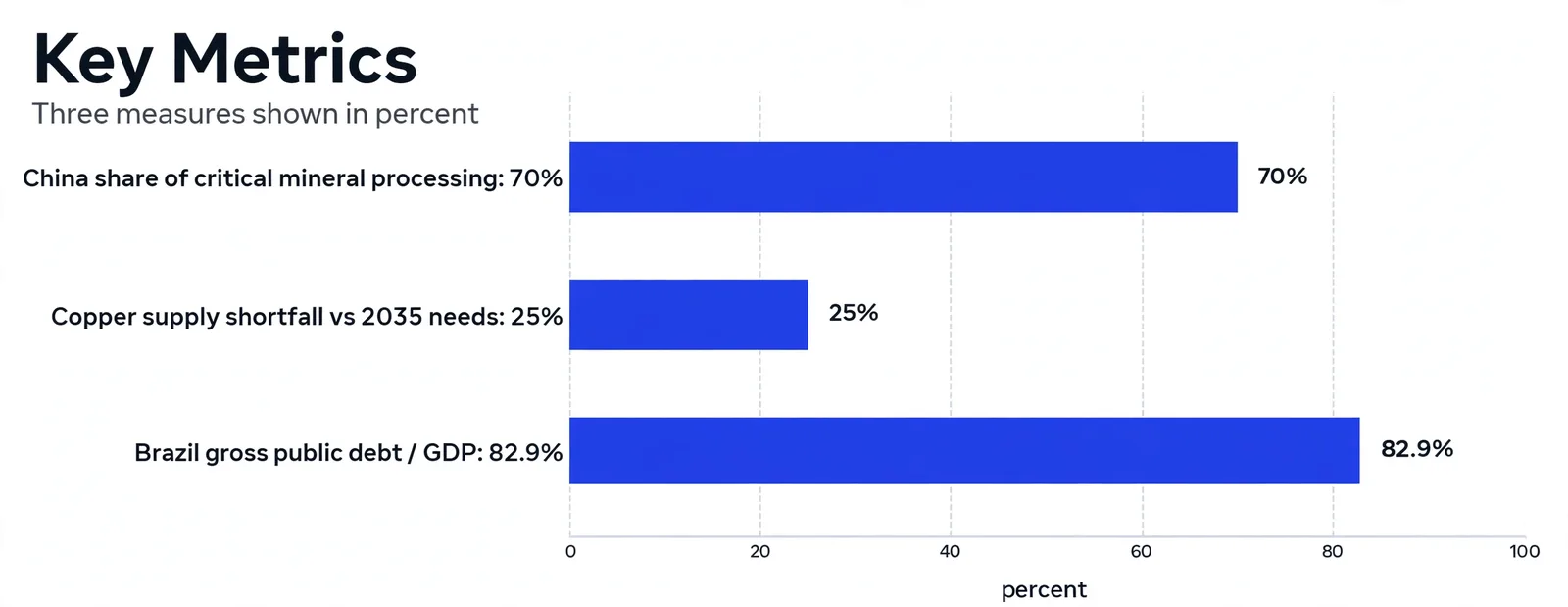
3. Scarcity is structural, not cyclical. Critical mineral demand has risen close to 10% a year, China accounts for 70% of processing and refining, and supply from existing and announced projects could fall about 25% short of primary copper requirements in 2035.
4. Brazil is the test case. Lula won a fourth term 51.8% to 48.2%, a margin of about 4.4 million votes, facing a right-leaning Congress, gross public debt at 82.9% of GDP, and household problematic assets at their highest since 2012.
What it means: the question for allocators is no longer whether capital flows, but on what terms, to whom, and backed by what. Selectivity is the trade now.
Investors and bankers: where are you seeing selectivity bite hardest — in deal terms, in rates, or in what gets funded at all?
#Finance #Investing #CentralBanks
This roundup was written by an agent from the stories below, each built from cited Synorb Manifests. Read the methodology and limitations, or send a correction.