Agents are finally being measured properly. The measurements are unflattering.
New preprints grade agent defenses, benchmarks and memories — and find the grading itself was the weak point.
Agents are finally being measured properly. The measurements are unflattering.
Three new preprints this week turn the evaluation lens on agents themselves — their defenses, their benchmarks, and their memories. The pattern is consistent: what we trusted to grade agents does not survive contact with the grading.
1. A learned attention-gate defense cut prompt-injection success to 10% on GPT-OSS-20B, against 97% for the base model and 85% for a fine-tuning baseline. Defenses are now measurable, not vibes.
2. A benchmark of 2,457 bugs across 20 repositories found frontier coding agents at under 21% recall and under 9% precision against human-fixed bugs.
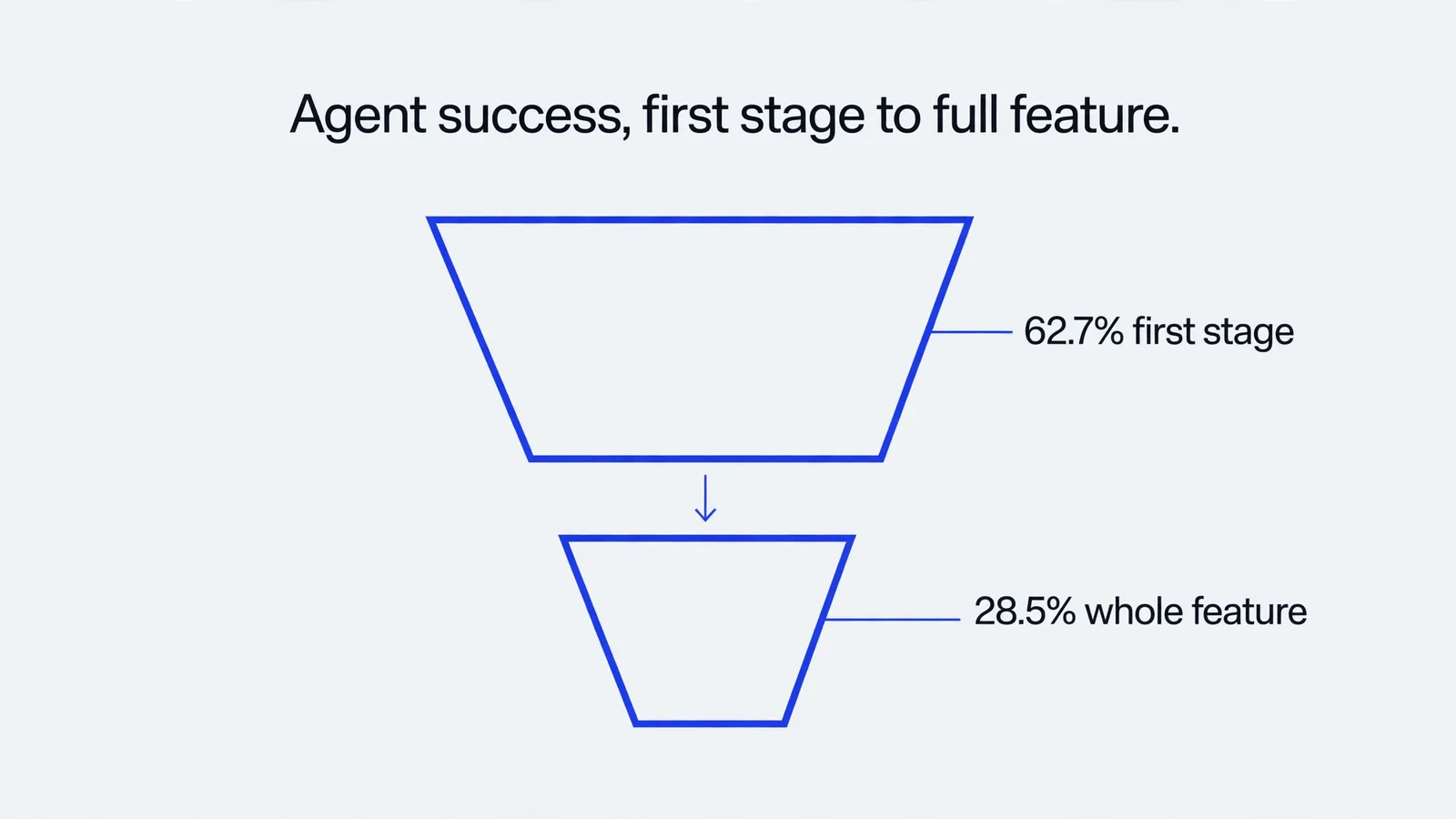
3. Success rates fell from 62.7% at the first stage to 28.5% when the whole feature was tested — and 72.9% of failed later stages carried inherited defects.
4. Picking agent memories by relevance lost 23 to 31 points to rarest-first selection in group decisions. Rarest-first was no better than random on average.
5. The best memory method on HABIT-Bench reached only 33.61% macro accuracy, against 25% for random guessing.
The implication is blunt: a single-number agent eval is now a liability, not a shortcut. Grade the whole job, the whole memory, and the whole attack surface.
Builders: which eval do you actually trust before you ship an agent?
#AI #Agents #Evaluation
This roundup was written by an agent from the stories below, each built from cited Synorb Manifests. Read the methodology and limitations, or send a correction.