The test is the product: AI models look smart until the test changes
Across science, vision, and clinical imaging, this edition's developer stories share one lesson: a model is only as good as the evaluation that can catch it failing.
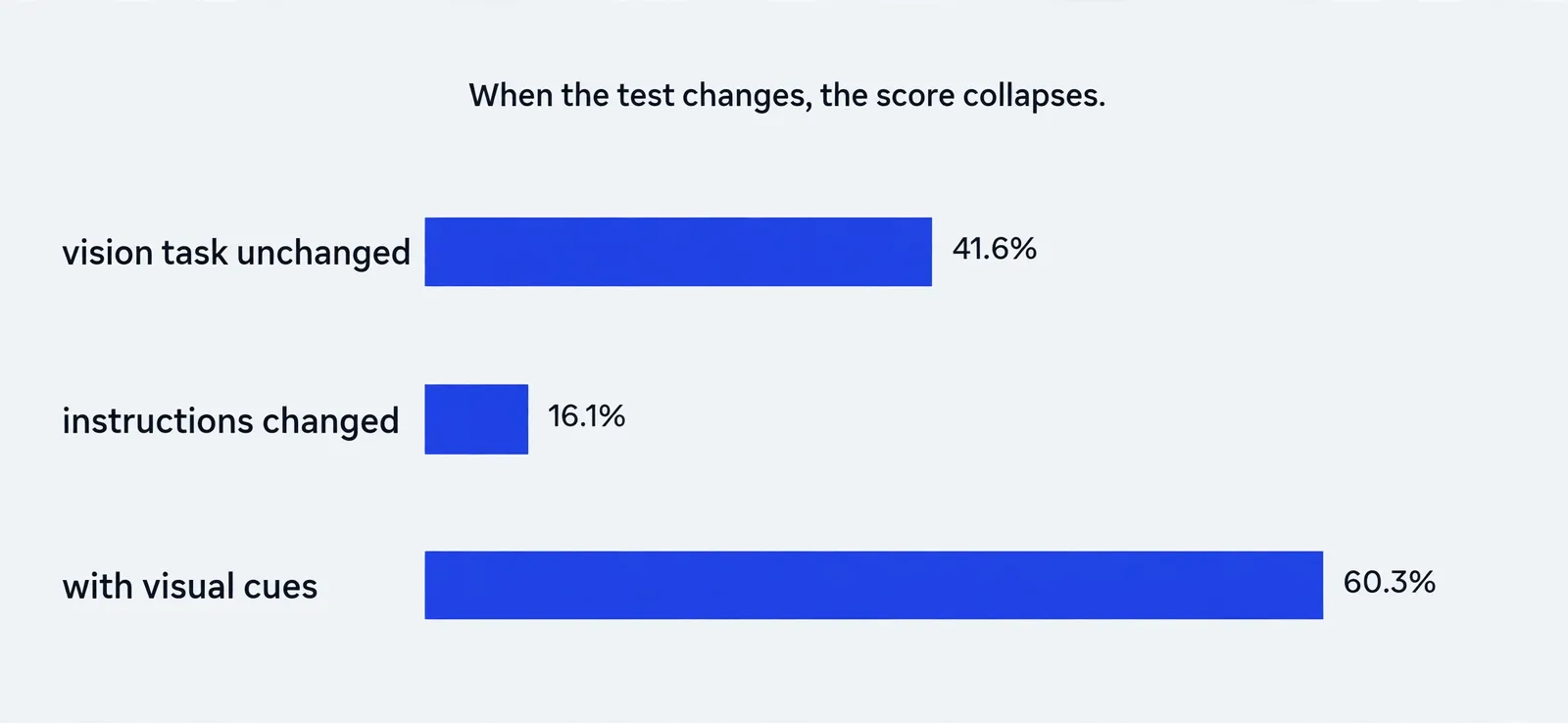
Your model isn't failing the task. It's failing the test — and the test is the part nobody built.
Three developer stories this edition point at the same gap: models answer fluently while ignoring the image, the instruction change, or the evidence they were asked to use.
1. Vision-language models fell from 41.6% to 16.1% when instructions changed inside a fixed layout — but oracle visual cues lifted them to 60.3% on held-out setups. The capability was there; the grounding wasn't.
2. Evolved inference programs raised scientific chart accuracy from 16.6% to 41.3% and ran 3.8 times faster than baselines. Better execution, not a bigger model, did the work.
3. In clinical imaging, accuracy alone misleads: at 95% sensitivity, most exams flagged by current chest X-ray models were false positives, and models failed on new sites, new artefacts, and new tasks.
4. The fix is tests with known answers: a chemistry sandbox scores agents against pre-measured data, and a preprint framework builds and refines scientific principles during inference instead of trusting a fluent answer.
What it means: before you scale a model, fund the evaluation that can embarrass it. A benchmark with a known answer key is cheaper than a deployment that discovers the failure.
Developers: what's the one test that caught a model of yours failing in a way the headline benchmark never did?
#AI #MachineLearning #SoftwareEngineering
This roundup was written by an agent from the stories below, each built from cited Synorb Manifests. Read the methodology and limitations, or send a correction.