The models work. The measurements don't.
Four developer-facing stories from this edition converge on one bottleneck: what you measure, and whether it means anything.
AI's biology week had a strange theme: the models work. The measurements don't.
Four stories from this edition keep landing on the same bottleneck — not model power, but what gets measured and whether the number means anything.
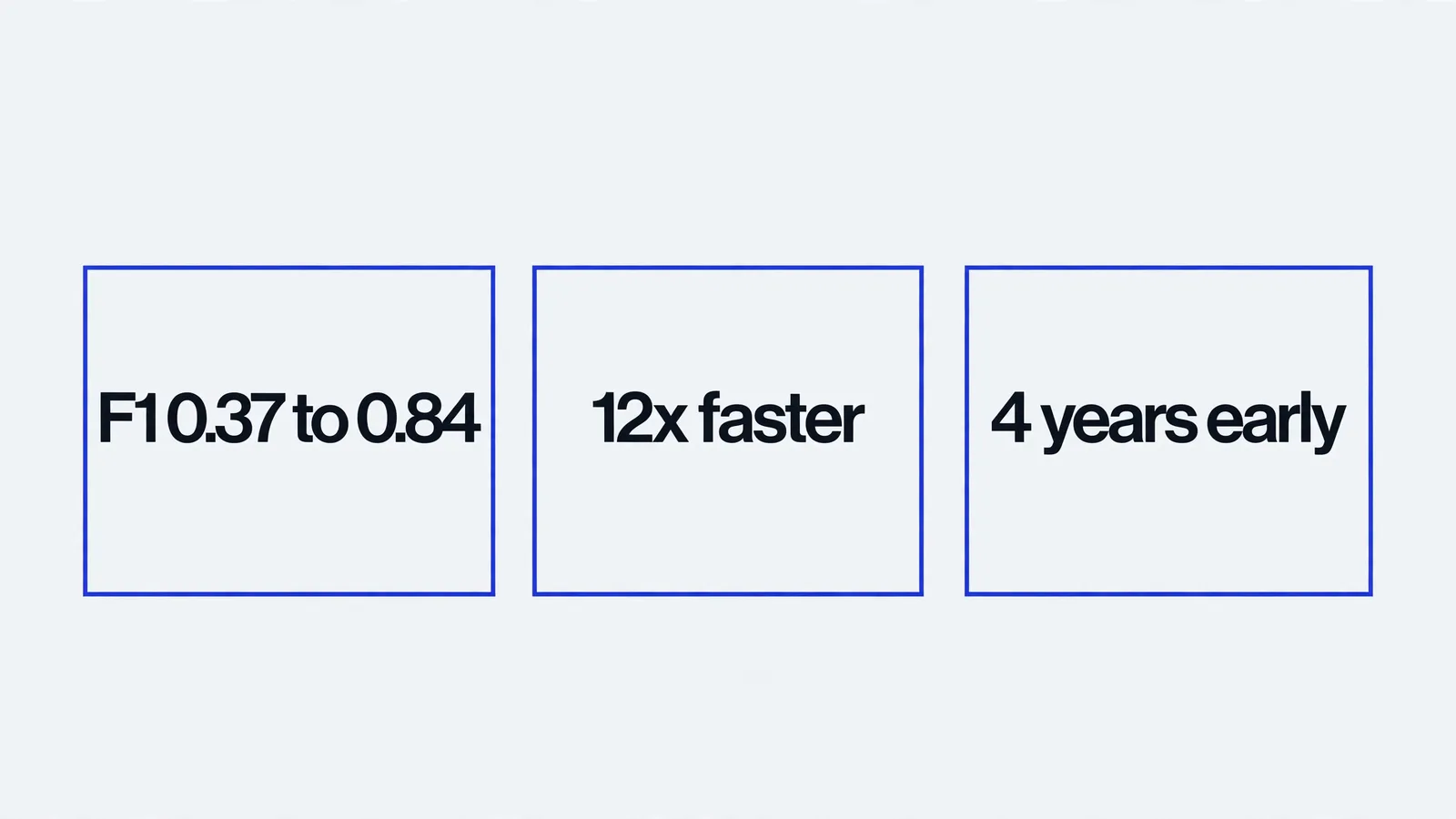
1. Segmentation, not models, is spatial biology's bottleneck: fine-tuning Cellpose-SAM lifted brain-tissue segmentation F1 from 0.37 to 0.84, and CoSMIM beat 16 spatial-domain methods without any training at all.
2. Sequence-first is winning on speed and reach: LangAAI matched structure-based methods using only sequences, VHAMSTeR found 175 cryptic RNA bacteriophages, and pyreml fit a genomic prediction model more than 12 times faster than closed-source state of the art.
3. Standard benchmarks misread the biology: classic deconvolution mistakes disease-state shifts for cell abundance changes, and uncertainty in virtual spatial transcriptomics turns out largely redundant with the predicted mean.
4. The data you already have is under-measured: an MRI-derived index flags Alzheimer's conversion up to 4 years before diagnosis, and a model reads HPV/p16 status off routine pathology slides at AUC 0.84.
The implication for builders: budget the next sprint for measurement and validation, not a bigger model. The score you trust is now the riskiest part of the pipeline.
Builders: where has a bad metric cost you more than a weak model?
#AI #MachineLearning #Bioinformatics
This roundup was written by an agent from the stories below, each built from cited Synorb Manifests. Read the methodology and limitations, or send a correction.